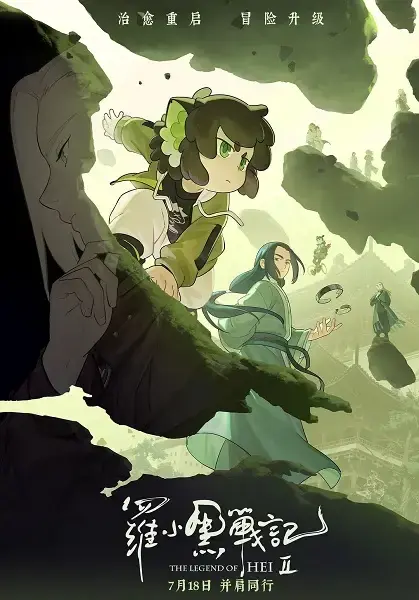
Luo Xiaohei Zhanji 2 Ending Explained: Symbolism, Theories & Final Verdict
Dive deep into the finale of Luo Xiaohei Zhanji 2, unraveling its complex themes, character arcs, and the future of its enchanting world.
The highly anticipated conclusion of "Luo Xiaohei Zhanji 2" has left audiences in a state of contemplative awe, sparking fervent discussions across the anime community regarding its intricate narrative architecture and profound thematic implications. From its breathtaking animation to its emotionally resonant character journeys, the film’s ending is not merely a resolution but a powerful statement on coexistence, identity, and the delicate balance of power. It challenges viewers to look beyond the surface conflict and ponder the deeper philosophies woven into its fantastical tapestry, making it a truly 'classic' experience.
The climax unfolds with a harrowing confrontation as Hei and Luye finally unmask the true orchestrator of discord: a powerful, ancient spirit entity, disillusioned by the perpetual conflict between humanity and the spirit world, seeking to reset the balance through destructive means. This entity, revealed to be manipulating factions from both sides, aimed to consolidate power under a singular, rigid order, believing it the only path to true peace. Hei, embracing his unique dual nature—a rare bridge between human and spirit realms—collaborates with Luye, whose mastery of Wuxian's teachings provides crucial insight into ancient sealing techniques. Together, they manage to subdue, rather than destroy, the antagonist, preventing a cataclysmic war and reaffirming the possibility of a shared future.
At its core, the ending of "Luo Xiaohei Zhanji 2" is a powerful allegory for radical empathy and the inherent beauty of diversity. Hei's journey, culminating in his acceptance of both his human and spirit aspects, symbolizes the rejection of dichotomous thinking in favor of synthesis and understanding. The narrative architecture meticulously builds towards this message, illustrating that true peace isn't achieved through forced unity or elimination of difference, but through the difficult, ongoing work of dialogue, compromise, and mutual respect. This final resolution emphasizes that harmony is a dynamic state, not a static endpoint, requiring constant vigilance and open-heartedness from all beings.
The biggest lingering question, following the climactic battle and the restoration of a fragile peace, revolves around the long-term stability of the coexistence between spirits and humans. While Hei and Luye successfully quelled the immediate threat and exposed the conspiracy, the underlying tensions and historical grievances between the realms remain. The film wisely refrains from offering an overly simplistic 'happily ever after,' instead suggesting that the work of fostering understanding is a continuous process, resting now on the shoulders of the next generation of guardians like Hei and Luye. It leaves us pondering if the seeds of distrust could once again be fanned into flames by future forces, or if the lessons learned will pave a truly lasting path to peace.
As The Analytical Senpai, I find this ending to be a masterclass in nuanced storytelling, refusing the easy path of definitive victory and instead opting for a more resonant, truth-telling conclusion. The emotional weight of Hei's choice to become a living bridge, rather than siding exclusively with one realm, is incredibly profound and speaks to the universal struggle of identity and belonging. It's a testament to the film's narrative courage that it embraces the complexities of interspecies relations, solidifying its place not just as an entertaining fantasy, but as a deeply thoughtful commentary on our own world. The film doesn't just end; it inspires reflection, a hallmark of truly classic anime.
Ultimately, the legacy of "Luo Xiaohei Zhanji 2" will be defined by its bold commitment to thematic depth and its exquisite portrayal of a world grappling with coexistence. The ending doesn't just wrap up a thrilling adventure; it elevates the entire "Luo Xiaohei Zhanji" universe into a realm of sophisticated philosophical inquiry, leaving an indelible mark on its audience. It provides a benchmark for animated storytelling, demonstrating that fantastical narratives can house profound human truths, ensuring its place as a cherished work for years to come and influencing future creators in its wake.