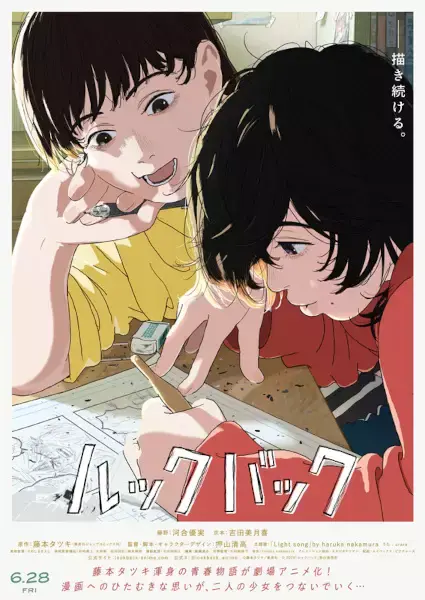
Look Back Ending Explained: Symbolism, Theories & Final Verdict
The Tsundere Critic unpacks the brutal, beautiful ending of 'Look Back', dissecting its impact and surprising emotional depth.
Alright, so 'Look Back' finishes, and everyone's predictably misty-eyed over the sheer emotional punch it delivered. Honestly, I braced myself for another saccharine tale of artistic friendship, but even *I* have to admit, Fujimoto pulled the rug out from under us with a brutal efficiency that’s hard to ignore. This isn't just about art; it’s about life, loss, and the inconvenient way they intertwine, leaving everyone scrambling for tissues and desperately trying to unpack what just happened.
The final act hits with the subtlety of a truck, plunging us into the unthinkable: Kyoumoto, the quiet, meticulous artist, is senselessly murdered in a random act of violence. Fujino is left utterly shattered, grappling with not just grief, but a crushing wave of 'what ifs' and survivor's guilt that threatens to consume her entirely. In a desperate, heartbreaking fantasy sequence, she revises history, imagining a timeline where her early artistic failures inspire Kyoumoto and prevent the tragedy, only to be yanked back to the desolate reality by a simple, discarded drawing.
At its core, 'Look Back' is a raw exploration of creation, inspiration, and the inescapable presence of fate – or perhaps, simply chance. The alternate timeline isn't just wish fulfillment; it represents Fujino's attempt to exert control over an uncontrollable reality, a desperate 'what if' that highlights her profound connection to Kyoumoto. The act of Kyoumoto finding Fujino's original four-panel comic, which she had initially mocked but secretly cherished, signifies the indelible mark they left on each other, even in silence, and the circular, enduring nature of inspiration.
The biggest question left hanging, beyond the immediate sorrow, is how one can truly move forward after such an arbitrary and devastating loss. Does Fujino's decision to continue drawing truly honor Kyoumoto, or is it merely an act of self-preservation cloaked in dedication and remembrance? It’s a thorny ethical and emotional dilemma, challenging the audience to confront whether carrying on someone's legacy is always a pure act, or if it's inevitably tinged with the survivor's burden.
Look, I’ll concede, it takes a certain kind of audacity to introduce such a devastating real-world horror into what seemed like a gentle character study. While some might whine about the abruptness, *I* found the ending undeniably effective, albeit a little manipulative in its emotional gut-punch. It’s not 'perfectly crafted' in the way some critics might gush, but it certainly left a mark – a surprisingly deep one, if I’m being brutally honest about my own cynical heart. Don't expect me to *like* admitting that.
Ultimately, 'Look Back' isn't just a story about two aspiring artists; it’s a poignant, if admittedly heavy-handed, meditation on grief, resilience, and the indelible power of artistic connection. It hammers home the fragility of life and the immense weight of inspiration, forcing us to consider how we honor those who shape us, even when they're gone. It's not a comfortable watch, but its legacy will undoubtedly be that of a short, sharp, and truly unforgettable experience that continues to resonate long after the credits roll.