Ginga Eiyuu Densetsu Ending Explained: The Bitter Triumph of the Lone King
The epic 110-episode saga of Ginga Eiyuu Densetsu concludes, leaving a unified galaxy but a heavy heart. The Tsundere Critic dissects its powerful, if imperfect, finale.
After 110 grueling OVAs, countless battles, and enough political intrigue to fill a thousand textbooks, you'd think I, The Tsundere Critic, would be prepared for the finale of Ginga Eiyuu Densetsu. Hmph. As if. This isn't just an ending; it's a philosophical statement wrapped in a space opera, a resolution that leaves you utterly satisfied yet profoundly melancholic, sparking endless debates among those who actually bothered to stick it out.
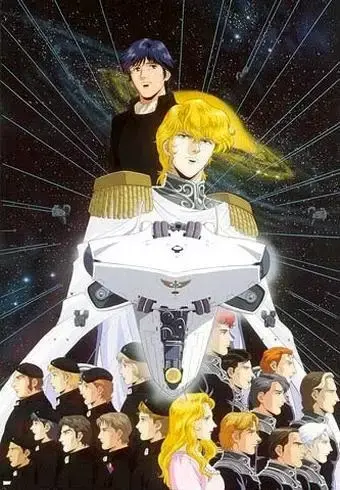
The final acts of Ginga Eiyuu Densetsu see Reinhard von Lohengramm's meteoric rise culminate in the unification of all humanity under his New Galactic Empire. With the Free Planets Alliance dissolved, and the last vestiges of resistance, including the Terraist cult, crushed, Reinhard achieves his lifelong ambition. However, this triumph is tragically short-lived, as the 'Lone King' succumbs to a mysterious, hereditary illness shortly after his son, Alexander Siegfried, is born, leaving the infant heir and his capable wife Hildegard as regent. Meanwhile, the legacy of Yang Wenli, though assassinated earlier by the Terraists, lives on through his protégé Julian Mintz, who navigates the complexities of this new, unified world, ensuring that the ideals of democracy aren't entirely extinguished.
The core thematic meaning of the ending revolves around the age-old dilemma of 'which is better: a benevolent autocracy or an inefficient democracy?' Reinhard achieves his dream of unifying humanity and ending the perpetual war, but at the cost of personal happiness and true freedom for all, becoming a king haunted by the ghosts of his past. Yang Wenli, conversely, never sought power but championed democracy, a cause he ultimately died for, leaving his ideals to be nurtured by the next generation. It's a bittersweet commentary on the inherent flaws in all systems and the cyclical nature of history itself.
The biggest lingering question for many, myself included, is whether Reinhard truly found peace, or if his final victory was a hollow one. He unified the galaxy, yes, and established a seemingly more efficient, less corrupt system than the Goldenbaum Dynasty he overthrew. Yet, he died alone, having lost his most trusted friend, Kircheis, and his greatest rival, Yang, haunted by his ambition and burdened by an illness that stole his future. Did he truly create a *better* world, or just a new iteration of the same power struggles, albeit temporarily stable due to his personal genius?
Frankly, the pacing in the final arcs could be a bit much, and Yang's death still feels like a cheap shot against a character who deserved more agency in his end. But I suppose, for a series of this magnitude, a clean, happy ending would have been a disservice. Watching Reinhard's lonely descent, the weight of his crown crushing him even as he held the entire galaxy, I'll admit it—it hit me harder than I expected. Hmph. Not that I'd ever openly praise such blatant emotional manipulation, but I suppose it wasn't *completely* devoid of merit, artistically speaking.
Regardless of personal grievances, the ending of Ginga Eiyuu Densetsu cements its status as an unparalleled masterpiece in anime history. Its intellectual depth, character development, and unflinching examination of political philosophy remain unmatched to this day. It's an ending that doesn't just conclude a story; it ignites thought, prompting viewers to consider the true cost of peace, the burden of leadership, and the enduring struggle between ideals and reality, leaving an indelible mark on anyone brave enough to embark on its colossal journey.