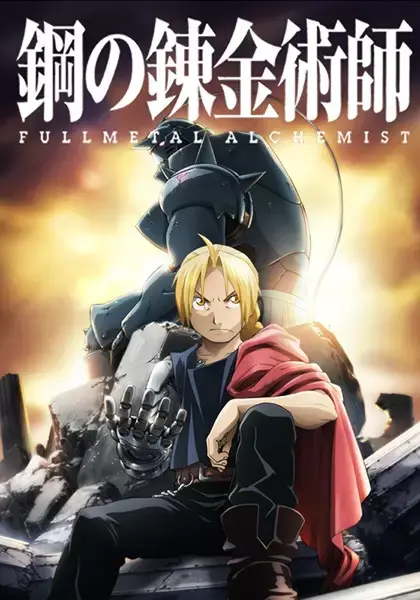
Fullmetal Alchemist: Brotherhood Ending Explained: The Ultimate Equivalent Exchange and Humanity's Truth
Unpacking FMA:B's profound conclusion, we explore its thematic core, the Elric brothers' ultimate sacrifices, and the enduring legacy of a masterpiece.
The conclusion of Fullmetal Alchemist: Brotherhood, specifically the monumental final arc culminating in Episode 64, "Journey's End," provided one of the most satisfying and thematically rich resolutions in anime history. For a series celebrated for its intricate world-building, profound philosophical questions, and relentless pacing, the pressure to deliver an ending that honored its narrative architecture and character development was immense. This final act not only met but exceeded expectations, sparking fervent discussion among viewers about the true meaning of Equivalent Exchange and the Elric brothers' hard-won peace.
The climax sees Edward Elric facing the homunculus Father within the Gate of Truth itself, after Father's grand plan to absorb the world's souls and achieve godhood is thwarted. With the help of allies like Greed, Hohenheim's sacrificial alchemy, and his own unwavering spirit, Ed manages to weaken Father. In a final, desperate act, Father's true, pathetic form is dragged back into the Gate. However, Alphonse's body, recovered from inside the Gate, is lifeless. Ed, understanding the ultimate price, makes his final, most profound equivalent exchange: he sacrifices his own Gate of Truth – and thus his ability to perform alchemy – in exchange for Al's body and soul. This selfless act restores Al completely, and the brothers return to a world forever changed by their journey.
The true symbolic weight of FMA:B's ending lies in its redefinition of Equivalent Exchange. Throughout the series, it's presented as a rigid, almost cruel law of the universe: to obtain something, something of equal value must be lost. Yet, the ending subverts this, presenting a deeper, more human truth. Edward's final sacrifice isn't about equal 'value' in a material sense, but about the immeasurable worth of human connection, love, and growth. By giving up his Gate, Ed chooses a future where his strength comes not from alchemy, but from his own two hands, his intellect, and the bonds he shares, proving that the greatest treasures cannot be quantified or obtained through alkahestry, but earned through genuine effort and heart.
The biggest lingering question, often debated among fans, revolves around the implications of Edward giving up his Gate of Truth. Does this mean he completely loses all understanding of alchemy, or merely the ability to perform it without a transmutation circle? The narrative strongly implies the latter; Ed can still comprehend alchemical principles, but he relinquishes the universal access to knowledge and power that the Gate grants. This choice is crucial: it signifies his complete rejection of relying on an external, divine-like power, embracing instead a purely human path. It's not about forgetting alchemy, but about choosing a life where his identity and worth are not defined by it, forging a future based on his own merit.
As The Analytical Senpai, I find Brotherhood's conclusion nothing short of a narrative masterstroke. It meticulously ties up every character arc, resolves every thematic thread, and delivers an emotional punch without resorting to cheap sentimentality. The architectural precision with which Arakawa-sensei crafted this story, and how Studio Bones adapted it, is evident in every beat of the finale. It's an ending that doesn't just provide closure; it elevates the entire series, solidifying its place as a paragon of storytelling that understands the nuanced interplay between ambition, sacrifice, and the profound journey of self-discovery. It reminds us that true power lies not in god-like abilities, but in the strength of the human spirit.
Ultimately, the legacy of Fullmetal Alchemist: Brotherhood is inextricably linked to its phenomenal ending. It's a conclusion that reinforces the series' core messages about the value of life, the dangers of hubris, and the enduring power of family bonds. By eschewing a grand, world-shattering magical solution for a deeply personal and human resolution, Brotherhood cemented its status as a timeless classic. It stands as a powerful testament to how character-driven storytelling, even within a fantastical setting, can resonate on the most fundamental levels, leaving audiences with a sense of profound satisfaction and a renewed appreciation for the journey, not just the destination.