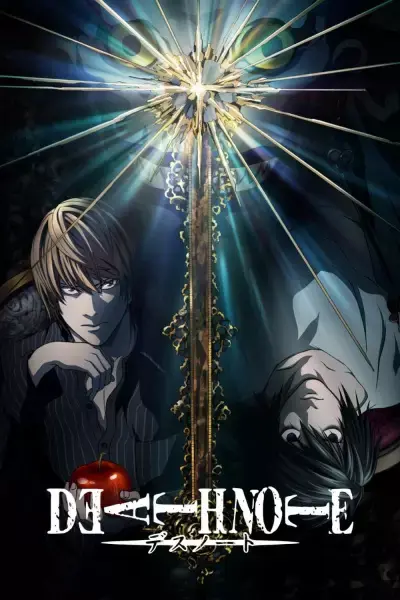
Death Note's Finale: A Flawed Masterpiece That Broke Me (A Little), Alright?
The highly anticipated conclusion of Death Note left fans stunned and divided. Was Kira's reign of terror truly over?
Ah, the Death Note finale. After weeks of high-stakes mind games and the ever-present question of who would truly prevail, the culmination was… exactly what you'd expect, if you were paying attention. The internet was abuzz, of course, with debates hotter than a freshly-brewed coffee that I definitely didn't spill on myself. Everyone had their theories, their hopes for Light, or their fervent desire for his downfall, making this an ending that sparked discussions for months, much to my slight amusement.
The final episode, 'New World,' delivered the inevitable showdown at the Yellowbox Warehouse. Light Yagami, cornered and exposed by Near, finally had his carefully constructed house of cards collapse. His desperate pleas and frantic attempts to write names were thwarted, his loyal pawn Mikami failed spectacularly, and his god complex shattered into a million pieces. Ultimately, it wasn't the brilliant detective Near who delivered the final judgment, but Ryuk, the death god who started it all, writing Light's name in his own Death Note, bringing a rather poetic end to the series' titular antagonist.
The overarching symbolic meaning of Light's fall is a stark reminder that absolute power corrupts absolutely, and no human can truly play God without becoming a monster. Light, once a brilliant student with a twisted sense of justice, devolved into a paranoid, megalomaniacal killer obsessed with his own supremacy. His physical and mental breakdown in the warehouse, stripped of his composure and dignity, visually underscores the complete erosion of his humanity, leaving behind only a terrified, pathetic shell of his former self. It’s a classic cautionary tale, really, even if it feels a bit… obvious.
The biggest lingering question for many fans, myself included, isn't so much 'who won?' (it was Near, obviously) but 'was Light's downfall truly inevitable?' And, frankly, yes. Light's hubris was his ultimate undoing, a fatal flaw that led him to make increasingly risky and arrogant mistakes. His belief in his own infallibility blinded him to the possibility of being outsmarted, especially by a successor who deliberately mirrored L's methods. There was no scenario where a human could wield such power indefinitely without being caught or consumed by it; his reign was always on borrowed time.
Ugh, fine, I'll admit it: watching Light's desperate, gasping run and his eventual collapse was… impactful. It was a well-executed, if predictable, end to a character who was both charismatic and utterly monstrous. The series did a decent job of making you question if you could root for Kira, even if I was always on the side of justice, obviously. It was a grim, fitting end, even if I rolled my eyes at some of Light's more theatrical moments. Don't think I'm getting soft, though; it just hit harder than I anticipated, alright?
Regardless of how you felt about Light's ultimate fate, the Death Note ending solidified its place as a groundbreaking psychological thriller. It sparked countless debates about morality, justice, and the consequences of power, cementing its legacy as one of the most thought-provoking anime of its generation. The series' impact continues to resonate, proving that even a story about a notebook can leave an indelible mark on its audience, much to my begrudging admiration.