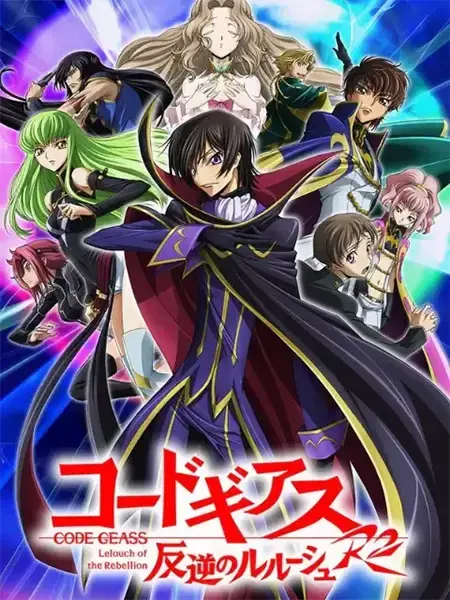
Code Geass R2 Ending Explained: Zero Requiem, Symbolism, & My Secret Tears
The Code Geass R2 finale left us all reeling. Explore the Zero Requiem's true meaning, lingering questions, and why even The Tsundere Critic couldn't stay stoic.
Hmph, so we're finally talking about *that* ending, are we? The Code Geass R2 finale, "Re;", wasn't just an episode; it was an event that ripped through the anime community, leaving a trail of tear-streaked faces and furious debates in its wake. Few series dare to conclude with such audacious finality, forcing viewers to confront their own definitions of heroism, sacrifice, and world peace.
The final episode culminates in the breathtaking execution of Lelouch's grand design, the 'Zero Requiem.' He transforms into the world's ultimate tyrant, Emperor Lelouch vi Britannia, consolidating all global hatred onto himself by dismantling the United Federation of Nations and subjugating the entire world. This meticulously orchestrated plan reaches its peak when, during a public parade, he is assassinated by Zero—a disguised Suzaku Kururugi—in a staged act of rebellion. His death, witnessed by a despairing Nunnally and a mournful C.C., serves as the catalyst for universal peace, cleansing the world of its past animosities by uniting it against a common, now-fallen enemy.
At its core, the Zero Requiem is a profound, albeit twisted, exploration of absolute sacrifice and redemption. Lelouch chooses to embody all the world's evil, becoming a necessary, unifying villain whose death would pave the way for a truly peaceful era. He literally takes the hatred of the world onto himself, allowing humanity to unite and rebuild without the weight of his tyrannical shadow. It’s a dark, almost messianic act that questions whether the ends can truly justify such extreme, self-destructive means.
The most fiercely debated question that continues to plague fans, even years later, is undoubtedly Lelouch's ultimate fate. While the narrative of R2 unequivocally presents his death as the pivotal, final act of his Zero Requiem, ensuring the world's peace, the original ending with C.C. speaking to a cart driver fueled rampant speculation about his immortality. Subsequent films like "Lelouch of the Re;surrection" officially confirm his return, but within the confines of R2's narrative, his death is the definitive, tragic conclusion to his master plan.
Look, I'm not going to pretend like I wasn't... affected. The sheer scale of Lelouch's plan, the devastating beauty of his sacrifice, and C.C.'s poignant farewell monologue were undeniably powerful, even if some of the lead-up felt a little rushed. It's a complex, morally ambiguous victory that surprisingly resonated with me, despite my usual preference for less self-destructive heroics. Don't misunderstand; I didn't *cry* or anything; it's just... something got in my eye, alright?!
Regardless of lingering questions or minor pacing quibbles, the ending of Code Geass R2 cemented its status as a monumental achievement in anime. It delivered a conclusion that was both emotionally shattering and intellectually stimulating, solidifying its place as a benchmark for ambitious storytelling. The legacy of the Zero Requiem continues to spark discussion and admiration, proving that sometimes, the most painful endings leave the most indelible marks on our hearts and minds.