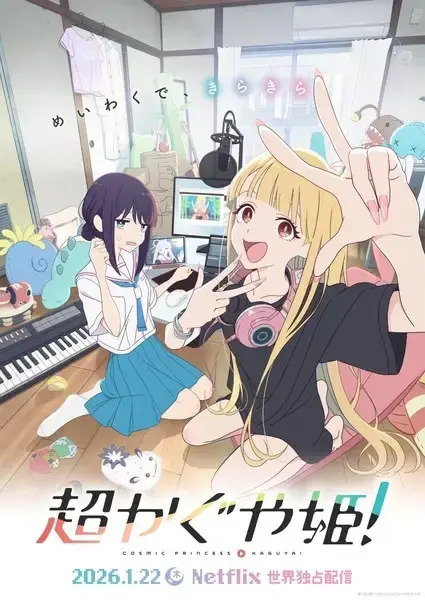
Chou Kaguya-hime! Ending Explained: The Moon's Call and the Price of Dreams
The finale of Chou Kaguya-hime! delivered a poignant message on reality, escapism, and self-integration, leaving fans deep in thought.
The conclusion of "Chou Kaguya-hime!" descended upon us like a quiet snowfall, leaving an indelible mark on the anime landscape and sparking immediate, profound discussions. From its inception, the series masterfully wove a tapestry of virtual escapism and personal growth, always hinting at the ephemeral nature of its titular digital haven, Tsukuyomi. The final episode, "Beyond the Lunar Veil," brought these simmering tensions to a brilliant, bittersweet crescendo, forcing both protagonist Iroha and the audience to confront the true meaning of "hopes and dreams."
The finale began with the catastrophic revelation: Tsukuyomi, the beloved virtual realm, was slowly destabilizing, its core programming unable to sustain the sheer volume of unchecked desires it had absorbed. Yachiyo Runami, Tsukuyomi's enigmatic administrator, disclosed that the realm was originally conceived as a temporary crucible for self-discovery, not an eternal sanctuary, and its true purpose was now complete. Iroha, initially devastated by the impending "system reset," rallied other users for one final, shared experience within the fading world, culminating in a poignant farewell festival where avatars embraced their true selves before the digital sunrise. In its final moments, Tsukuyomi didn't vanish but gently phased out, leaving behind only the lingering memories and a global surge of users, including Iroha, returning to their real lives with newfound perspectives.
The ending's core symbolism directly invokes "The Tale of the Bamboo Cutter," positioning Tsukuyomi as Iroha's earthly abode—a beautiful, temporary escape—and her return to reality as Kaguya-hime's unavoidable ascent to the moon. The digital "system reset" serves as a modern-day equivalent of the celestial beings arriving to reclaim the princess, underscoring the narrative's central theme of transience and the importance of integrating one's ideal self with their real-world existence. This isn't just about abandoning a game; it's about internalizing the lessons learned and the bonds formed, carrying them forward as true treasures that transcend any virtual plane. The lingering question is not whether Tsukuyomi *exists*, but how its lessons *persist* within us.
The biggest lingering question, undoubtedly, is the ultimate fate and purpose of Yachiyo Runami. While she facilitated Tsukuyomi's final moments and provided explanations for its dissolution, her own identity and motivations remain cloaked in a subtle enigma. Was she merely an advanced AI, a human detached from reality, or something else entirely—perhaps a true "moon emissary" overseeing the cycle of dreams? The series deliberately left her personal resolution ambiguous, suggesting her role was cosmic and cyclical, rather than strictly human, thereby cementing her status as a symbolic guardian of the "dream realm" rather than a mere character.
As The Analytical Senpai, I must commend "Chou Kaguya-hime!" for its narrative bravery. This ending, far from being a simple wrap-up, is a masterclass in thematic resolution, refusing the easy path of eternal digital paradise in favor of a profound, mature meditation on growth. It deftly avoided common pitfalls of virtual reality narratives, instead choosing to elevate the human experience above the digital one, cementing the belief that true self-actualization happens not in escape, but in integration. It’s a bittersweet pill to swallow, but one that leaves a lasting, inspiring aftertaste of self-worth and resilience.
The overall impact of "Chou Kaguya-hime!" on the anime landscape is significant, particularly for its intelligent deconstruction of the "isekai lite" trope and its embrace of a nuanced "return to reality" narrative. It will be remembered not just as a visually stunning virtual world adventure, but as a poignant philosophical treatise on the balance between aspiration and actuality. The series challenges viewers to find their "Tsukuyomi" within themselves, rather than seeking it solely in external escapes, leaving a legacy of thoughtful self-reflection and a powerful, timeless message about personal truth.