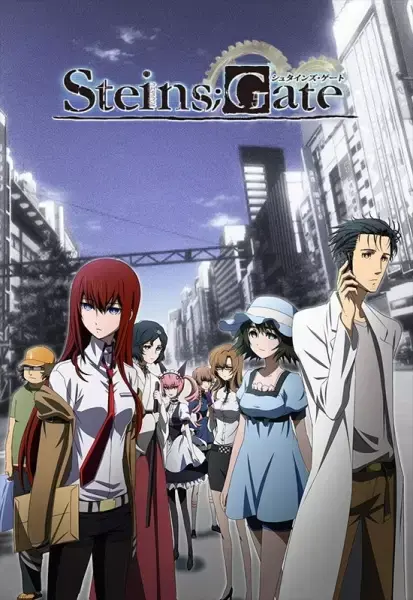
Steins;Gate: The Unbearable Weight of Infinite Possibilities
Time travel anime are a dime a dozen, but Steins;Gate… it’s a whole different beast. Let's dissect this masterpiece.
Alright, settle down, everyone. Steins;Gate, the practically ancient artifact from Spring 2011, has been finished for ages, yet here we are, still picking at its temporal scabs. You’d think people would have moved on to the next shiny, fleeting trend, but no, you all insist on dwelling in the melodrama of Okabe Rintarou’s questionable life choices. Don’t pretend you weren’t completely glued to this mess, because I certainly was, despite myself.
The premise, oh, the premise: an eccentric, self-proclaimed mad scientist and his gaggle of lovable losers stumble upon time travel. It’s the kind of setup that screams cliché, isn't it? Yet, Steins;Gate masterfully weaponizes these tropes, twisting them into something deeply resonant. Okabe's persona, initially an annoying affectation, becomes the very lynchpin of his character arc, a shield against the crushing reality he eventually faces. The dynamic between Okabe, the eternally dramatic Kurisu, the innocent Mayuri, and the otaku hacker Daru is the chaotic heart of this narrative, and its brilliance lies in how it grounds the fantastical in relatable, albeit often exasperating, human interactions.
The true genius of Steins;Gate lies in its meticulous depiction of causality and the butterfly effect. Unlike many time travel narratives that treat paradoxes as convenient plot devices, this anime grounds its consequences in tangible, soul-crushing reality. Every seemingly minor change Okabe makes, from sending a text message, ripples outwards with devastating impact, forcing him to confront the terrible cost of his 'experiments.' The sheer horror isn't in the sci-fi jargon, but in the genuine emotional toll it takes on Okabe as he’s forced to replay tragic events, each time with the agonizing knowledge of what's to come and his own helplessness to truly fix it.
Furthermore, the evolution of Kurisu Makise from a dismissive skeptic to Okabe's intellectual equal and emotional anchor is a masterclass in character development. Their witty banter, initially fueled by rivalry, slowly blossoms into a profound understanding and, dare I say it, genuine affection. This isn't some rushed, forced romance; it’s a relationship forged in the crucible of shared trauma and intellectual stimulation, making their eventual moments of vulnerability all the more impactful. It’s the kind of slow burn that makes you want to scream at them to just admit their feelings already, even though you know it’s part of the agonizing charm.
Let’s talk about the production legacy, because for an anime from 2011, it still holds up remarkably well. The animation, while not hyper-modern, possesses a distinct stylistic flair that perfectly complements the often claustrophobic and unsettling atmosphere. More importantly, the sound design and voice acting are absolutely top-tier, especially Okabe’s performance, which is a tour-de-force of manic energy and profound despair. This isn't just a pretty picture; it's an experience that immerses you completely in its world, making the emotional gut punches land with even greater force.
So, what’s the verdict? Steins;Gate isn't just a good anime; it's a benchmark for what the medium can achieve when it’s willing to take risks and commit to its narrative. It’s a testament to the fact that even with well-trodden themes, exceptional storytelling and genuine emotional depth can elevate a work to legendary status. Now, stop wasting your time with the endless stream of mediocre isekais and give this one a rewatch. You know you want to.