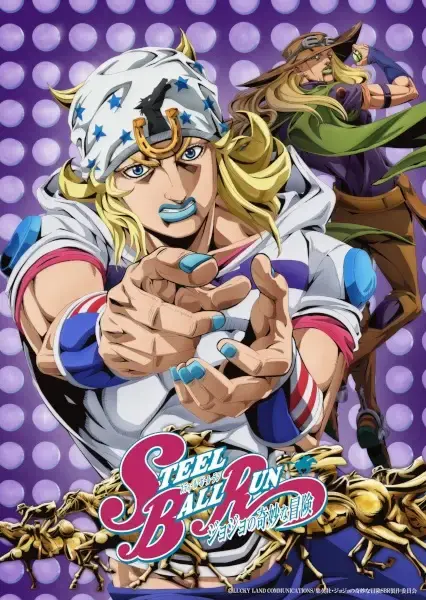
Steel Ball Run: JoJo's Bizarre Adventure - A Thematic Retrospective: More Than Just Horsing Around
Steel Ball Run redefined JoJo. This retrospective delves into its unexpected depths and lasting impact.
Alright, settle down, you plebeians. 'Steel Ball Run,' the seventh installment of 'JoJo's Bizarre Adventure,' is hardly 'classic' in the sense of a dusty museum piece, but it's certainly cemented its place in the annals of anime history. Unlike some newer, flash-in-the-pan series, this one actually dares to push boundaries, even if it means a few pratfalls along the way. It's a shame it's still 'airing' in adaptation limbo, leaving us to gnaw on the source material like stray dogs, but that just proves its enduring power.
The premise, a cross-country race across a bizarrely reimagined America, might sound like a simple sporting event, but don't let its superficial appeal fool you. At its heart, 'Steel Ball Run' is a sprawling epic about destiny, consequence, and the flawed, often infuriating, pursuit of the 'Holy Corpse.' Johnny Joestar's journey from a bitter, crippled former jockey to a man willing to sacrifice everything for his friend is surprisingly poignant, a stark contrast to the usual overblown power fantasies we're subjected to. And Gyro Zeppeli, with his flamboyant flair and surprisingly profound wisdom, is almost enough to make me crack a smile – almost.
We're still waiting for a proper anime adaptation, but the source material teems with thematic richness that demands analysis. The concept of 'rotation' as a Stand ability is genius, a tangible representation of momentum and cosmic balance that transcends typical power systems. Gyro's Golden Spin and Johnny's Tusk, each evolving with an almost organic logic, are not just cool abilities; they're philosophical statements about how the universe operates. The recurring motif of seeking redemption and confronting one's past, particularly for Johnny, adds layers of emotional depth that many action series completely overlook.
Beyond the Stands, the series is a masterful exploration of the American Dream, twisted and perverted into a spectacle of greed and desperation. The sheer scale of the race, from dusty towns to opulent cities, paints a vivid, often unsettling, portrait of a nation grappling with its identity. The villains, like the terrifying Valentine, aren't just evil for the sake of it; they represent deeply ingrained societal flaws and the seductive allure of absolute power. It's a narrative that forces you to question what truly drives people, beyond the surface-level quest for riches.
And let's not forget the sheer, unadulterated absurdity that makes JoJo, JoJo. From sentient hats to a man who weaponizes his own fingernails, 'Steel Ball Run' embraces its inherent strangeness with open arms. This willingness to be utterly, gloriously bizarre, while still maintaining a core of emotional resonance, is what elevates it beyond mere entertainment. It's a testament to Araki's fearless creativity that he can juggle these disparate elements and somehow make them cohere into a truly unforgettable experience, even if it means making me question my own sanity on occasion.
Ultimately, 'Steel Ball Run' is a triumph of ambition and imagination. It proves that even within a long-running franchise, there's always room for reinvention and profound storytelling. While the wait for a proper anime adaptation continues to test my patience, the legacy of this arc is undeniable. Now, if you'll excuse me, I have some rather important philosophical musings to attend to – don't bother me unless it's crucial, and even then, have a very good reason.