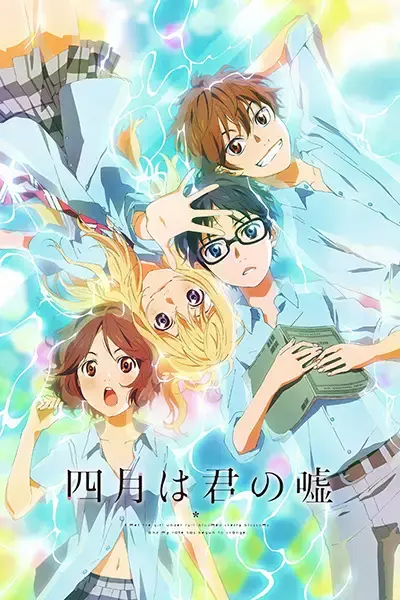
Shigatsu wa Kimi no Uso: A Symphony of Grief, Healing, and the Enduring Power of Music
A deep dive into the emotional resonance and masterful storytelling of 'Your Lie in April,' exploring its themes of loss, inspiration, and the human spirit.
“Shigatsu wa Kimi no Uso,” or “Your Lie in April,” stands as a poignant masterpiece within the anime landscape, having concluded its run in the Fall of 2014. This series is not merely a story about young musicians; it is a profound exploration of trauma, healing, and the indelible impact one person can have on another. As a finished work, we can now fully appreciate the meticulous construction of its narrative and its lasting emotional legacy, offering a fertile ground for deep thematic retrospection.
At its core, “Your Lie in April” chronicles the journey of Kousei Arima, a piano prodigy shattered by the death of his abusive mother, which rendered him unable to hear his own playing. His life is irrevocably altered by the vibrant and enigmatic violinist, Kaori Miyazono, who pulls him back into the world of music and, more importantly, back into life itself. The narrative masterfully intertwines the emotional weight of grief with the soaring beauty of classical music, illustrating how art can serve as both a refuge and a catalyst for confronting inner turmoil.
The production quality of “Your Lie in April” is nothing short of exceptional, especially when considering its broadcast in 2014. The animation, handled by A-1 Pictures, is fluid and dynamic, particularly during the performance sequences. The depiction of the music itself, though visualized, transcends mere visual spectacle; it’s an emotional conduit, with subtle shifts in color palettes and character expressions conveying the internal struggles and soaring joys of the performers. This deliberate attention to visual storytelling amplifies the emotional impact of the music, making each performance a pivotal moment in character development.
The narrative structure of “Your Lie in April” is a testament to its emotional depth, employing a non-linear approach that gradually unveils Kousei's past trauma. The initial episodes establish the present, a seemingly melancholic existence for Kousei, before interweaving flashbacks that reveal the suffocating rigidity imposed by his mother and the subsequent psychological breakdown. This gradual unveiling of Kousei’s past trauma, intertwined with Kaori’s increasingly desperate attempts to revitalize him, creates a powerful dramatic tension, foreshadowing both the potential for healing and the looming specter of loss.
One of the most profound, albeit tragic, thematic elements is the exploration of music as a form of catharsis and communication. Kousei’s inability to play due to his trauma highlights how deeply intertwined our emotional states are with our abilities. Kaori, too, uses her music not just for performance, but as a way to express her own unspoken feelings and aspirations, particularly towards Kousei. The way their music dialogues with each other, often in unspoken ways, demonstrates the profound ability of artistic expression to transcend words and connect souls on a deeper level.
“Shigatsu wa Kimi no Uso” is a rare anime that lingers long after the final note fades. Its exploration of grief, the transformative power of human connection, and the sheer beauty of music makes it an enduring classic. The series’ ability to evoke such profound emotional responses, coupled with its high production values and intricate storytelling, cements its legacy as a must-watch for anyone who appreciates narratives that touch the heart and soul.