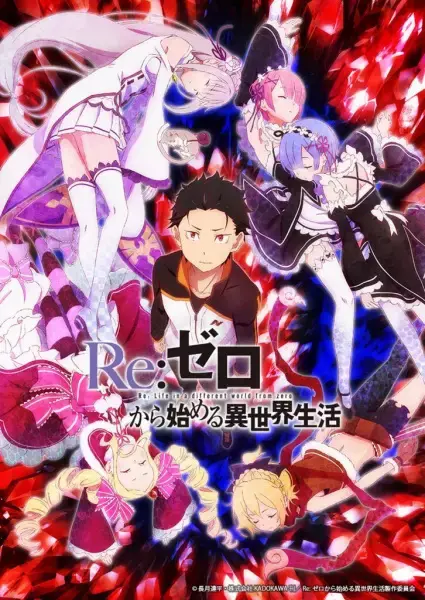
Re:Zero: A Thematic Retrospective on Suffering and Resilience
Beyond its thrilling isekai premise, Re:Zero crafts a profound narrative on trauma, growth, and the cyclical nature of despair. Our deep dive explores its enduring impact.
Re:Zero kara Hajimeru Isekai Seikatsu, a titan of the Spring 2016 isekai wave, has long since cemented its status as a finished, yet perpetually relevant, masterpiece. While initially appearing as another wish-fulfillment fantasy, the series quickly distinguishes itself through its unflinching exploration of psychological trauma and the sheer, unadulterated agony of its protagonist. This is not a tale of effortless victories, but a brutal examination of what it means to truly break and rebuild oneself against insurmountable odds.
At its core, Re:Zero is a masterful study of Subaru Natsuki's psychological fortitude, or rather, his initial lack thereof. His "Return by Death" ability, a seemingly convenient narrative device, transforms into a crucible that forces him to confront the consequences of his failures and the trauma of repeated, agonizing deaths. The narrative masterfully weaves together elements of psychological horror, political intrigue, and the classic fantasy tropes of a chosen hero, but always grounds them in Subaru's visceral, personal suffering.
One of Re:Zero's most compelling narrative structures is its deliberate subversion of isekai expectations. Instead of empowering Subaru with overwhelming strength, his "cheat" ability serves as a constant reminder of his own fragility and the immense burden of his knowledge. The production quality, particularly the dynamic character animation during intense sequences and the evocative score, amplifies the emotional impact of his repeated deaths and the desperate attempts to alter fate, showcasing a rare commitment to visual storytelling that elevates the source material.
The character arcs, especially those of Emilia and Rem, are intricately tied to Subaru's development. Emilia's struggle with prejudice and her own identity, coupled with Rem's unwavering devotion and her own traumatic past, provide crucial emotional anchors and foils for Subaru's often self-destructive tendencies. The nuanced portrayal of these relationships, born from shared hardship and mutual reliance, demonstrates a sophisticated understanding of character development that extends beyond the typical harem dynamics often found in the genre.
A hidden thematic layer within Re:Zero lies in its exploration of fatalism versus free will. Subaru's repeated deaths, while seemingly preordained, are often the result of his own choices, both good and bad. The anime poses a profound question: can one truly escape a predetermined fate, or is the struggle itself the true victory? This philosophical undercurrent, coupled with the sheer psychological weight of Subaru's experiences, grants the series a depth that resonates long after the credits roll.
Re:Zero kara Hajimeru Isekai Seikatsu stands as a testament to the power of psychological storytelling within the isekai framework. Its legacy is one of pushing the boundaries of character exploration, demonstrating that true heroism often lies not in innate power, but in the arduous journey of overcoming one's own limitations and the scars left by profound suffering. For those seeking an anime that challenges expectations and delves into the darkest corners of the human psyche, Re:Zero remains an essential, albeit harrowing, watch.