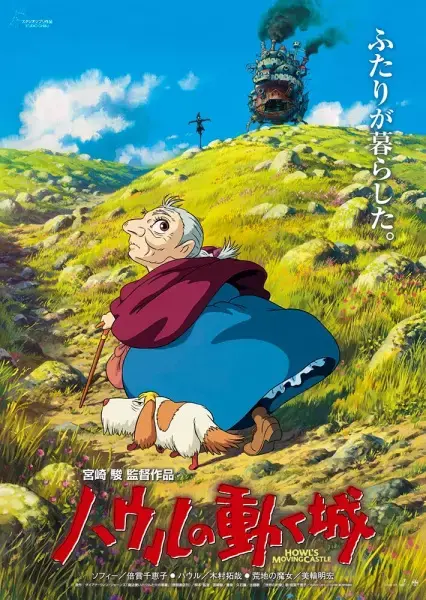
Howl's Moving Castle: More Than Just a Whimsical Wanderer
This isn't just a pretty fairy tale. Beneath the moving castle's charm lies a profound exploration of self-worth and the dangers of war.
Honestly, expecting anything less than brilliance from Studio Ghibli and the legendary Hayao Miyazaki is just setting yourself up for disappointment, isn't it? 'Howl's Moving Castle,' a certified classic that's been charming audiences for years, might seem like a straightforward magical adventure on the surface. But as usual with these things, if you scratch past the sparkly surface, you'll find something far more complex and, dare I say, emotionally resonant.
At its core, this film is about a young woman, Sophie, who is cursed with old age and finds herself thrust into a world of magic and war. Her journey to break the curse becomes intertwined with the enigmatic wizard Howl and his constantly shifting, ridiculously over-the-top moving castle. What truly drives the narrative isn't just the quest for a cure, but Sophie's gradual discovery of her own inner strength and beauty, a beauty that transcends physical appearance and the societal expectations placed upon her. The constant threat of war, a surprisingly stark element, serves as a potent metaphor for the destructive nature of hatred and fear, a theme Miyazaki is no stranger to.
The 'curse' itself is such a transparently shallow plot device, really. Sophie's transformation into an old woman isn't just a magical inconvenience; it's a catalyst for her to shed the insecurities that plagued her as a young woman. She becomes bolder, more opinionated, and less concerned with pleasing others because, frankly, who cares what they think when you look like you've lived a century? This is a classic case of external hardship forcing internal growth, and while it's a well-trodden path, Ghibli executes it with such heart that you almost forget how predictable it is. It’s almost… touching.
And Howl, oh Howl. The spoiled, vain wizard who is supposedly a notorious womanizer. What a trope! Yet, beneath the flamboyant displays and dramatic pronouncements, he's just as lost and afraid as Sophie, albeit in a far more flamboyant way. His constant transformation and fear of revealing his true self, symbolized by his refusal to use his magic for war, mirror Sophie’s own journey of self-acceptance. He’s desperately seeking validation and fearing rejection, a much more relatable vulnerability than his reputation would suggest, making their eventual connection feel earned, not just some contrived romance.
Consider the titular castle itself. That chaotic, clanking monstrosity is a perfect visual representation of Howl's inner turmoil. It’s a jumbled mess of mismatched parts, constantly shifting and moving, just like his own identity and his attempts to outrun his past. It’s a symbol of his magic, his desires, and his fears, all cobbled together into a single, unwieldy entity. The fact that it's powered by Calcifer, a fire demon with his own deep-seated issues, only adds another layer to the film's exploration of connection and codependency, a surprisingly mature theme for what appears to be a children's movie.
In the end, 'Howl's Moving Castle' is far more than just a whimsical journey through a magical landscape. It's a beautifully rendered meditation on self-love, the destructive nature of conflict, and the courage it takes to embrace your true self, even when the world tells you to conform. It’s a timeless masterpiece that continues to resonate, proving that sometimes, the most profound stories are wrapped in the most enchanting packages. Don't pretend you weren't moved, you know you were.