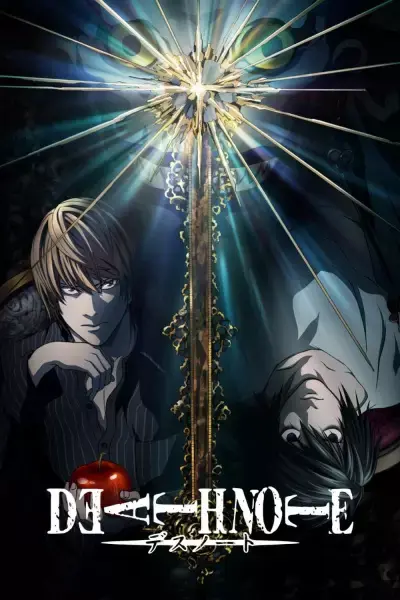
Death Note: The God Complex and the Curse of the Notebook
This isn't just a story about a killer notebook; it's a dissection of justice, morality, and the intoxicating allure of power. A true classic.
Honestly, who needs another angsty teenager with a god complex? Yet, here we are, still talking about Light Yagami and his stupidly overpowered Death Note, years after this masterpiece wrapped up. It’s infuriating how a show that *should* have been a simple edgy power fantasy manages to burrow its way into your brain and refuse to leave, forcing you to confront uncomfortable truths about yourself and the systems we live under. And Ryuk, with his apples and his morbid fascination, is just the cherry on top of this philosophical sundae.
At its core, Death Note is a brutal examination of justice and morality, masquerading as a high-stakes cat-and-mouse game. Light, our supposed protagonist, transforms from a bored genius into a self-proclaimed deity, while L, the eccentric detective, embodies a twisted form of righteousness. The symbiotic, yet antagonistic, relationship between Light and Ryuk further complicates matters, highlighting the inherent flaws and corrupting nature of absolute power, no matter how noble the initial intentions might have seemed.
The true genius of Death Note lies in its subtle portrayal of the human thirst for control, even in the face of undeniable consequences. Light's descent isn't sudden; it’s a gradual erosion of his humanity, fueled by his belief that he alone is fit to judge the world. This isn't just about killing criminals; it's about Light's desperate attempt to impose his idealized vision of order onto a chaotic reality, a common human failing amplified to terrifying proportions by the supernatural.
Beyond the moral quandaries, the series masterfully explores the psychological toll of its central conflict. Both Light and L are brilliant, but their obsessions consume them, blurring the lines between duty and madness. The constant mental warfare, the elaborate deceptions, and the ever-present threat of exposure create a palpable tension that forces the viewer to question their own loyalties and the very nature of sanity itself.
Looking back, Death Note’s cultural impact is undeniable, solidifying its place as a watershed moment for anime in the West. It transcended the typical otaku niche, captivating a global audience with its mature themes and intricate plot. The very concept of a notebook that can kill is inherently compelling, but it’s the execution – the intelligent writing, the stylish animation, and the unforgettable characters – that cemented its legacy as a truly seminal work.
So, while I’d love to pretend I was above its manipulative charm, Death Note is one of those rare anime that actually sticks with you, long after the credits roll. It’s a dark, twisted, and utterly brilliant exploration of power, justice, and the infuriating fallibility of even the smartest among us. Go watch it, I dare you.