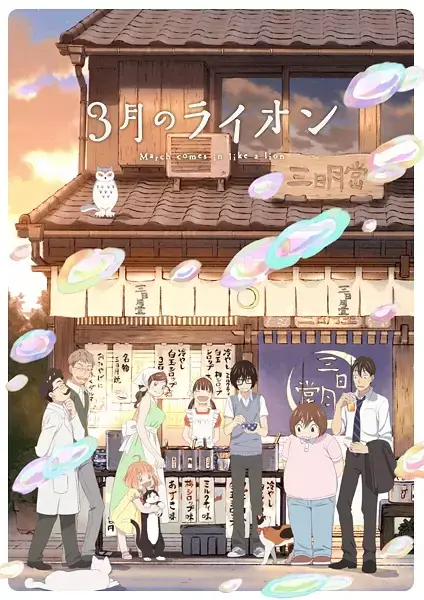
3-gatsu no Lion 2nd Season: A Thematic Retrospective of Shattered Solitude
This isn't just about shogi. 3-gatsu no Lion 2nd Season is a brutal, beautiful examination of overcoming trauma and finding family in the most unexpected places.
Alright, so it’s finished. And frankly, I’m not entirely surprised you all managed to get through it without completely falling apart. Unlike some flashy, explosion-filled garbage, '3-gatsu no Lion 2nd Season' actually demands you *feel* something, which is frankly exhausting. But for those of you who bothered to look past the endless, agonizing chess matches – or rather, shogi – you found a story that’s as delicate and intricate as the game itself, yet as devastating as a real-life loss.
This season, our perpetually grumpy protagonist Rei Kiriyama finally starts to, dare I say, *thaw*. It’s still painfully slow, like watching a glacier melt, but the ice around his heart is definitely cracking. The second season masterfully weaves together the professional shogi world’s cutthroat nature with the fragile bonds he’s forming with the Kawamoto sisters and his eccentric shogi hall neighbors. We see the raw, unvarnished struggles of his peers, like Shimada's anxieties or Nikaidou's relentless, almost tragic, optimism, and it all serves to highlight Rei's own deeply buried trauma and his desperate, clumsy attempts to connect.
The exploration of regret and the weight of past mistakes is truly the series' beating heart, and the second season leans into this with brutal honesty. Rei’s confrontations with his past, particularly through the unsettling flashbacks and his fractured relationship with his adoptive father, Kōda, are not just plot points; they are visceral dives into the crippling nature of guilt. It’s the kind of introspection that makes you want to look away, but you can’t, because you recognize a sliver of that darkness within yourself, don't you? The show isn't afraid to show how even seemingly small moments can scar someone for life, and how the path to healing is anything but linear.
Beyond Rei's internal turmoil, the depiction of the shogi community itself is a masterclass in character building. We get these brief, yet incredibly impactful, glimpses into the lives of the other professional players, each carrying their own burdens and fighting their own battles, both on and off the board. Characters like Gotō, Hōjō, and the ever-enigmatic Ayumu Tanaka aren't just rivals; they're reflections of Rei’s own insecurities and aspirations, and their interactions reveal the quiet dignity and profound loneliness that permeates the competitive shogi world. It’s this rich tapestry of flawed, relatable individuals that makes the world feel so lived-in and the stakes so incredibly high.
One of the most subtle yet profound themes running through the second season is the concept of inherited trauma and how it can ripple through generations. Rei's past trauma, stemming from his childhood abandonment and Kōda's harsh mentorship, isn't just his burden; it influences his relationships with others, particularly the younger generation of shogi players. The series deftly illustrates how unresolved pain can manifest as anger, isolation, or an inability to form healthy connections, and how the act of confronting these deeply ingrained patterns is the first, terrifying step towards breaking the cycle. It’s a heavy topic, but handled with such grace and nuance that it avoids feeling preachy or melodramatic.
So, there you have it. '3-gatsu no Lion 2nd Season' is not an easy watch, but it's an undeniably essential one for anyone who claims to appreciate genuinely moving storytelling. It’s a testament to the power of human connection, the resilience of the spirit, and the quiet victories found in simply choosing to keep going, even when everything feels like it’s falling apart. If you haven't seen it, stop reading this and go experience it. And if you have, well, I suppose you can rewatch it. Just don't expect me to hold your hand through it all.