Beyond the Blockbusters: 7 Sci-Fi Anime Gems You've Overlooked
The Analytical Senpai
Author
In the ceaseless currents of anime discourse, certain genres command immediate attention while others, despite their profound contributions, tend to drift into undeserved obscurity. As we navigate the complex narrative tapestry that defines anime in 2026, it becomes imperative to revisit foundational works and uncover hidden gems within the expansive sci-fi domain. The true measure of a genre's depth lies not just in its popular behemoths, but in the nuanced storytelling and innovative animation found in titles that often fly under the mainstream radar.
This compilation is not merely a list; it is an analytical spotlight on seven such sci-fi narratives. Each selection offers a distinct lens into humanity's future, presenting intricate world-building, challenging philosophical inquiries, and often, exemplary production value that demands closer inspection.
Aria the Origination
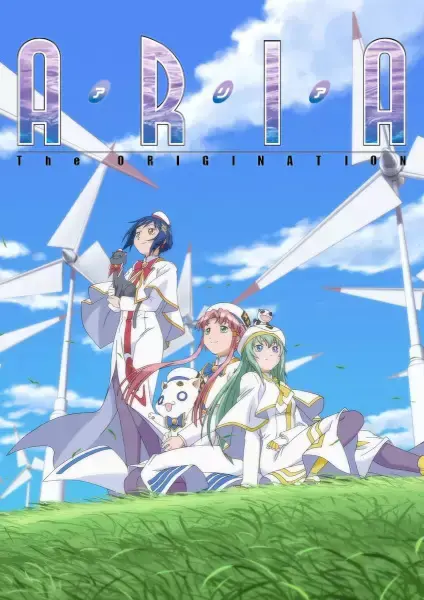
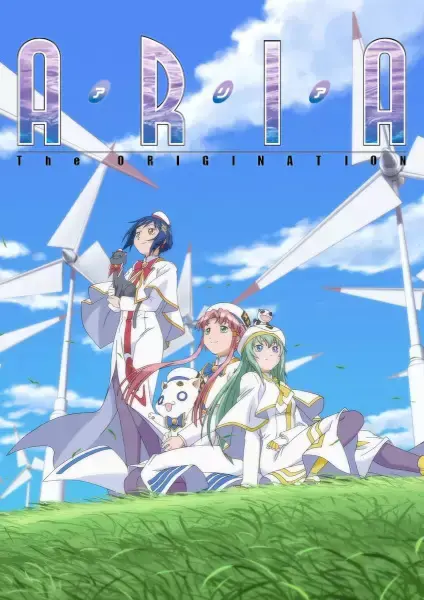
A 2008 series spanning 13 episodes, "Aria the Origination" culminates a journey through a meticulously terraformed Mars, now known as Aqua. The narrative follows Akari Mizunashi and her peers as they train to become Prima Undines, the city's celebrated gondoliers. Under the art direction of Junichi Higashi, Neo-Venice is rendered with breathtaking serenity, allowing the contemplative pacing to amplify the intricate details of a future where humanity has harmonized with an alien, yet familiar, environment. Its impressive score of 8.47 underscores its sustained artistic quality.
This title is often dismissed as pure iyashikei, inadvertently obscuring its profound sci-fi underpinnings. Its "underrated" status stems from how its sophisticated world-building, exploring themes of ecological adaptation, technological integration, and humanity's spiritual connection to a new home, is frequently overlooked in favor of its tranquil aesthetics. It stands as a quiet titan of speculative fiction.
86 Eighty-Six


A-1 Pictures delivered a visually stunning adaptation in 2021 with "86 Eighty-Six," masterfully blending visceral mecha action with a scathing socio-political critique across its initial 11-episode run. The series dissects the Republic of San Magnolia's insidious caste system, where the silver-haired Alba deny the humanity of the 'Eighty-Six' who pilot autonomous legions in a ceaseless war. The dual narrative perspective, juxtaposing the battlefield's brutality with political apathy, is expertly crafted and contributes to its robust 8.34 score.
While garnering significant attention, "86 Eighty-Six" remains "underrated" in the depth of its thematic exploration. Beyond the compelling combat choreography, it relentlessly examines the psychological trauma of war, systemic discrimination, and the dehumanization inherent in propaganda. Its unflinching gaze into the human cost of conflict elevates it far beyond typical mecha fare into a poignant and intellectually challenging work of military science fiction.
Koukaku Kidoutai: Stand Alone Complex
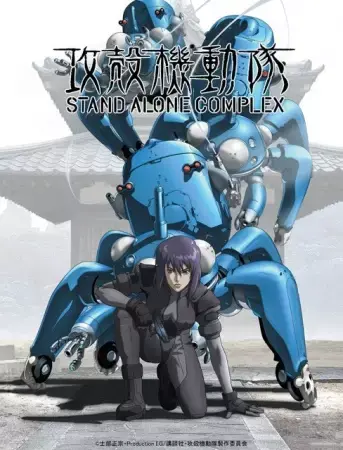
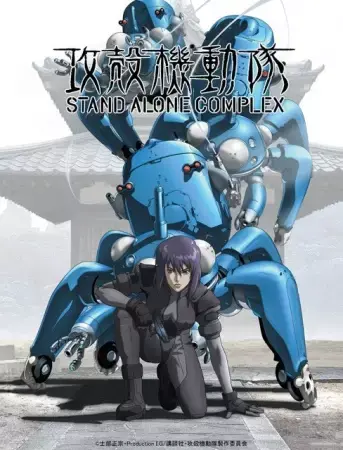
Production I.G.'s landmark 2002 series, "Ghost in the Shell: Stand Alone Complex," is a foundational text in cyberpunk anime, spanning 26 episodes. Under Kenji Kamiyama's directorial vision, it expands the philosophical universe of Mamoru Oshii, delving into the intricacies of a hyper-connected society where cybernetic implants blur the lines of identity and consciousness. The episodic investigations of Public Security Section 9, led by Major Motoko Kusanagi, dissect complex digital crimes and political conspiracies with intellectual rigor. Its score of 8.42 is a testament to its enduring influence.
Despite its canonical status, "Stand Alone Complex" is paradoxically "underrated" in how deeply newer audiences engage with its prescient themes. Its intricate exploration of the 'Stand Alone Complex' phenomenon, information warfare, and the nature of self in an increasingly digital world predicted many challenges of our current era. The sheer density of its speculative fiction and its nuanced moral dilemmas demand continuous re-evaluation, often overshadowed by its initial acclaim or its action sequences.
Gintama Movie 1: Shinyaku Benizakura-hen


The 2010 film "Gintama: The Movie" (with an exceptional score of 8.52) distills the unique essence of Hideaki Sorachi's universe into a condensed cinematic experience. While widely celebrated for its unparalleled comedic genius and genre deconstruction, the underlying premise of a feudal Edo-period Japan colonized by technologically advanced aliens, the Amanto, is a remarkably robust science fiction framework. The film masterfully balances its signature self-aware humor with intense action and character drama, all within this distinct sci-fi backdrop.
Gintama's sci-fi world-building, though ever-present, is often "underrated" because it serves as the consistent, logical foundation for its comedic and action-oriented narratives, rather than being the primary focus of philosophical exposition. The meticulous consistency of its alien species, advanced weaponry, and societal integration of futuristic technology within a historical setting represents a sophisticated fusion of genres that warrants deeper analytical appreciation beyond its entertainment value.
Gintama: Jump Festa 2008 Special


The 10-minute "Gintama: Jump Festa 2008 Special," titled "Shiroyasha Koutan," offers a concentrated, pivotal glimpse into the franchise's origins and underlying sci-fi elements. Despite its brevity, this special, which scored a high 8.35, effectively encapsulates the serious historical conflict and character motivations that are foundational to Gintama's unique blend of Edo-period aesthetics and futuristic technology. It serves as an early showcase of the series' capacity to weave profound moments within its outlandish setting.
This special is often "underrated" due to its limited availability and succinct runtime, making it easily overlooked by the broader audience. However, it is a crucial piece for understanding the foundational sci-fi premise that underpins Gintama's narrative. It demonstrates how early the series established its unique genre fusion—a detailed world of aliens and advanced tech coexisting with samurai culture—solidifying the structural integrity that later enabled its comedic brilliance.
Chou Kaguya-hime!


"Cosmic Princess Kaguya!" is a concise yet impactful production that, despite being a single episode, proficiently explores contemporary sci-fi concepts surrounding virtual realities and the profound nature of dreams. The narrative centers on Iroha Sakayori, a high school student navigating a virtual realm known as Tsukuyomi, where hopes and dreams converge. Its stylistic execution captures the ethereal quality of digital existence, and its impressive 8.5 score for a short film hints at its thematic efficacy.
This short is "underrated" precisely because of its format; a singular, brief episode means it frequently escapes broader discussion despite its intellectual merit. Its concentrated exploration of digital identity, escapism, and the potential emotional weight within virtual realms demonstrates how potent science fiction can be even in brief narrative windows, posing compelling questions about consciousness and reality without the need for an extended runtime.
Shinseiki Evangelion Movie: Air/Magokoro wo, Kimi ni
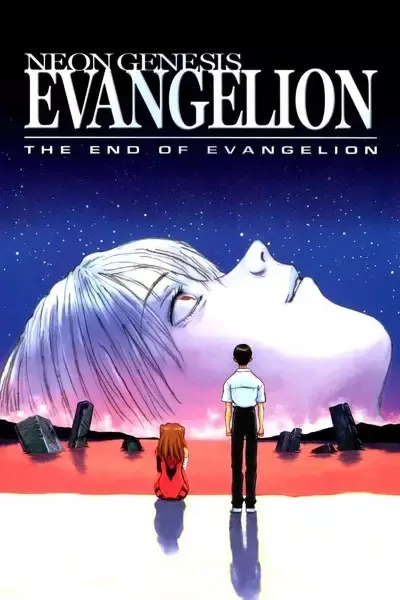
Released in 1997 by GAINAX and Production I.G., "Neon Genesis Evangelion: The End of Evangelion," with its stratospheric 8.57 score, stands as a seminal work that fundamentally redefined anime cinema. This film plunges into the psychological abyss of Shinji Ikari and the cataclysmic Third Impact, employing avant-garde animation techniques and a radically experimental narrative structure. Its visual language, particularly in its latter half, is a masterclass in abstract storytelling and emotional deconstruction that remains profoundly impactful decades later.
While undeniably legendary and extensively analyzed, "The End of Evangelion" is paradoxically "underrated" in its sheer cinematic audacity and uncompromising artistic vision. Its raw, visceral deconstruction of human connection, identity, and the very concept of narrative resolution, often met with controversy upon release, is still not fully appreciated for how it dared to dismantle conventional storytelling, proving the medium's capacity for profound, challenging art over commercial comfort. It remains a singular, unparalleled artistic statement.
These seven titles, spanning different eras and sub-genres of sci-fi, exemplify the vast intellectual and artistic potential of anime. Their narratives challenge, provoke, and often, quietly redefine what science fiction can achieve. We invite fellow analysts and enthusiasts to share their own overlooked sci-fi treasures and enrich this ongoing discourse.
For more deep dives into animation techniques and thematic structures, stay tuned to Anime Deluxe, where we continue to dissect the art of Japanese animation.
"True innovation often blossoms in the shadows of the mainstream, waiting for discerning eyes to recognize its brilliance." — The Analytical Senpai
Related Blogs
View all →
Still Worth Watching? 5 Supernatural Anime That *Actually* Hold Up (Even in 2026)
Unravel Top 5 Short Mystery Anime: Perfect Weekend Binge Watches

2026's Top 5 Mystery Anime: Are They Worth Your Cynical Gaze?

Shoujo Scarcity? These 7 Unlikely Anime Deliver the Feels
Comments (0)
No comments yet. Be the first to share your thoughts!